Kansas Bar Girl Incident and Journey Price Full Video
In the age of social media, where information spreads at lightning speed and privacy is increasingly fragile. What might once have remained private can now be broadcast to millions within minutes, often with devastating consequences. This issue has once again come into the spotlight following the viral “Kansas Bar Girl Incident,” prompting a powerful response from Maddie Kowalski a former University of Florida student whose own traumatic experience with online exploitation drew widespread attention.

Kowalski’s recent TikTok video is not just a reaction to another viral controversy. It is a warning, a plea, and a call to action that highlights a deeper, systemic problem that continues to affect countless individuals, many of whom remain unheard.
Contents
- 1 A Personal Tragedy Turned Public Awareness and Full Video
- 2 The Kansas Bar Girl Incident: A Familiar Pattern
- 3 A Plea for Attention and Accountability
- 4 Inside the “Burnerverse”
- 5 A Disturbing Discovery: Participation Across Demographics
- 6 The Hidden Victims
- 7 The Role of Social Media Platforms
- 8 Legal Challenges and Limitations
- 9 The Psychological Toll
- 10 A Call for Collective Responsibility
A Personal Tragedy Turned Public Awareness and Full Video
Maddie Kowalski first became known after videos allegedly connected to a fraternity assault involving her were shared online without her consent. The incident quickly gained traction, turning her personal trauma into a public spectacle. As is often the case in such situations, the viral nature of the content amplified the damage, exposing her to widespread scrutiny, judgment, and emotional distress.
Journey Price and Maddie Kowalski Video
Uncensored video of Journey Price and the girl at the Kansas bar
kansas-bar-girl-and-journey-price-video.mp4
While laws in many jurisdictions including Florida have made non-consensual image sharing illegal, Kowalski’s experience revealed a gap between legislation and enforcement. Despite the legal protections in place, the damage had already been done. Her identity, privacy, and sense of security were profoundly affected, illustrating how difficult it is to fully remedy harm once content spreads online.
The Kansas Bar Girl Incident: A Familiar Pattern
The recent “Kansas Bar Girl Incident” follows a disturbingly similar pattern. The incident reportedly involved college students engaging in a bathroom stall at a bar near the University of Kansas. Footage of the encounter was circulated online, sparking intense reactions across social media platforms.
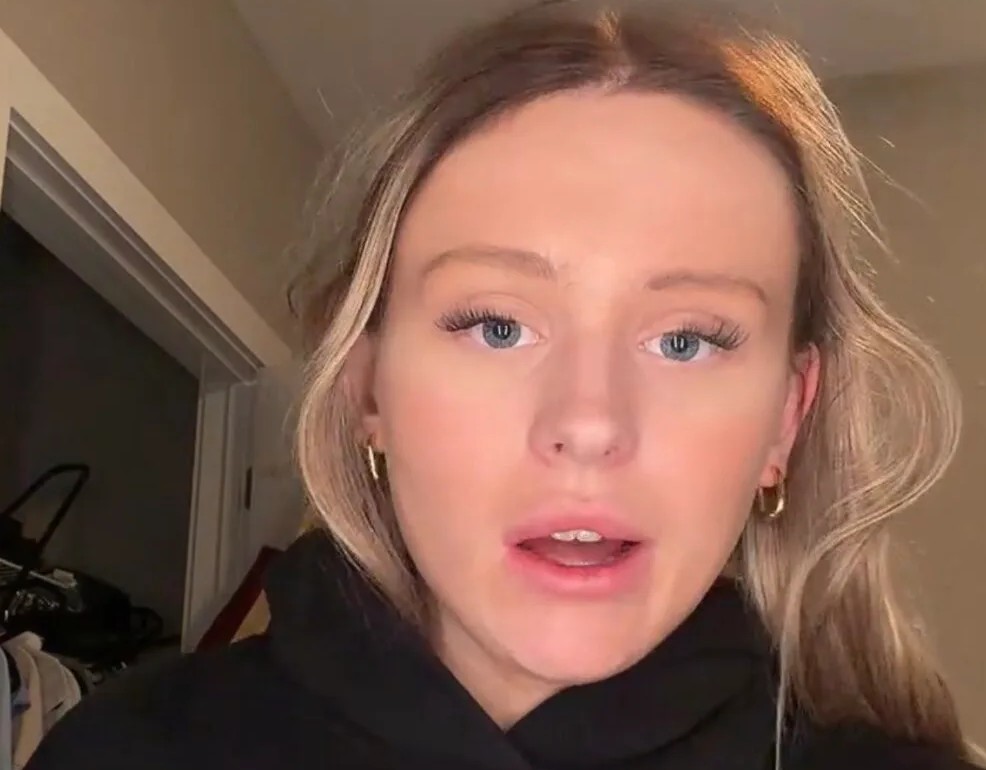
Public responses ranged from outrage to mockery, with many users engaging in discussions that often overlooked the fundamental issue of consent. Instead of focusing on the ethical violation of sharing such content, much of the discourse centered on sensationalism and entertainment. This reaction, Kowalski argues, is part of the problem.
To her, this was not an isolated event but another example of a recurring cycle one in which individuals’ private moments are exposed without permission, consumed by audiences, and then quickly forgotten.
A Plea for Attention and Accountability
Kowalski began her TikTok video with a direct and emotional appeal: “If nobody ever listens to another thing I say, please just listen to this video.” This opening set the tone for a message rooted in urgency and frustration.

She emphasized that what happened in Kansas is not unique. Rather, it reflects a broader and more insidious issue that continues to evolve online. According to Kowalski, there exists a network of individuals who repeatedly engage in the sharing of explicit content without consent, targeting victims in a systematic way.
Her frustration is not only directed at those who share such content but also at the platforms that host it. She specifically called on social media leaders to take stronger action against accounts involved in these activities, arguing that current measures are insufficient.
Inside the “Burnerverse”
One of the most alarming aspects of Kowalski’s statement is her description of an online ecosystem she referred to as the “Burnerverse.” This network allegedly consists of anonymous or pseudonymous accounts that specialize in posting and redistributing explicit videos of women without their consent.
According to Kowalski, these accounts operate in coordinated ways. They not only share videos but also gather and publish personal information about the individuals involved a practice known as doxxing. This adds another layer of harm, exposing victims to potential real-world threats.
Even more disturbing is the existence of live audio spaces where participants discuss and demean the victims. Kowalski revealed that she joined one of these voice chats using a fake account and was shocked by what she heard. Participants reportedly spent hours mocking, degrading, and objectifying the women featured in the videos.
The normalization of such behavior within these communities raises serious concerns about the culture being fostered online.
A Disturbing Discovery: Participation Across Demographics
While many might assume that such behavior is limited to a specific group, Kowalski highlighted a more unsettling reality. According to her observations, participants in these communities are not limited to young men. Women and older individuals are also involved.
This revelation points to a broader cultural issue, where harmful behavior is not confined to a single demographic. The participation of women in degrading other women, in particular, raises questions about internalized misogyny and the social dynamics that enable such actions.
Kowalski expressed anger and disappointment at this discovery, noting that the problem is more widespread and complex than she initially believed.
The Hidden Victims
One of the most important points Kowalski raised is that not all victims are aware that their images have been shared. In her own case, she only discovered the videos because they went viral. But what about those whose content does not gain widespread attention?
Kowalski suggested that many individuals featured in such videos may never know they have been exposed online. This creates a hidden population of victims who are unable to seek justice or protect themselves because they are unaware of the violation.
This aspect of the issue underscores the need for proactive measures rather than reactive ones. Waiting for content to go viral before addressing it leaves countless individuals vulnerable.
The Role of Social Media Platforms
At the center of this issue are the platforms that host and distribute content. Kowalski directly called out platform leadership, arguing that they have not done enough to prevent the spread of non-consensual material.
The challenge for these platforms is significant. With millions of users and vast amounts of content uploaded daily, moderation is a complex task. However, Kowalski argues that the existence of repeat offenders and organized networks indicates a failure to address known problems.
The debate over platform responsibility often centers on the balance between free expression and user safety. In cases like this, the stakes are particularly high, as the consequences of inaction can be life-altering for victims.
Legal Challenges and Limitations
Although laws against non-consensual image sharing have been enacted in many states, enforcement remains a major challenge. Perpetrators often operate anonymously, making it difficult to identify and prosecute them.
Additionally, the global nature of the internet complicates jurisdiction. Content can be uploaded in one country, shared in another, and viewed worldwide. This creates legal gray areas that are difficult to navigate.
There have been renewed discussions about federal legislation to address these challenges more effectively. However, progress has been slow, and many victims continue to fall through the cracks.
The Psychological Toll
The impact of non-consensual image sharing extends far beyond the initial violation. Victims often experience long-term psychological effects, including anxiety, depression, and a loss of trust in others.
Kowalski spoke candidly about her own emotional journey, noting that while public attention eventually faded, the effects of the incident did not. This highlights a disconnect between public perception and the lived reality of victims.
What may be seen as “drama” or a fleeting scandal by the public can have lasting consequences for those directly involved.
A Call for Collective Responsibility
In closing her video, Kowalski acknowledged that she does not have all the answers. However, she stressed that action must be taken. Her message was directed not only at platforms and lawmakers but at society as a whole.
Addressing this issue requires a multi-faceted approach. Platforms must improve moderation and accountability. Lawmakers must create and enforce effective regulations. Users must reconsider their own behavior and the role they play in amplifying harmful content.
Education and awareness are also critical. Understanding the impact of non-consensual image sharing can help shift cultural attitudes and reduce the demand for such content.
The story of Maddie Kowalski and the Kansas Bar Girl Incident is not just about two isolated events. It is a reflection of a broader problem that continues to evolve in the digital age.
As technology advances, so too must our efforts to protect privacy and uphold ethical standards. The ease with which content can be shared should not come at the expense of individual dignity and consent.
Kowalski’s voice serves as a powerful reminder that behind every viral video is a real person with real consequences. Ignoring the issue only allows it to persist. Confronting it through action, awareness, and accountability is the only way forward.
Breaking News -Jayhawk Cafe Bathroom Video and Internet Culture
Video De La Sarca Biker and What Happened
Nikko Natividad Viral Video and Online Discussion
Frazzledrip Full Video and The Internet Conspiracy
Igor Komarov Bali Video and A Tourist Tragedy
El Mencho Killed Video and The Violence After Death
Pinay Viral Gold Medalist Scandal 2026 and the Jerriel Cryazee Viral Video